
News · Economics and Business of Sports · Marketing and Media
James' helicopter: when an athlete's time is worth more than travel costs.
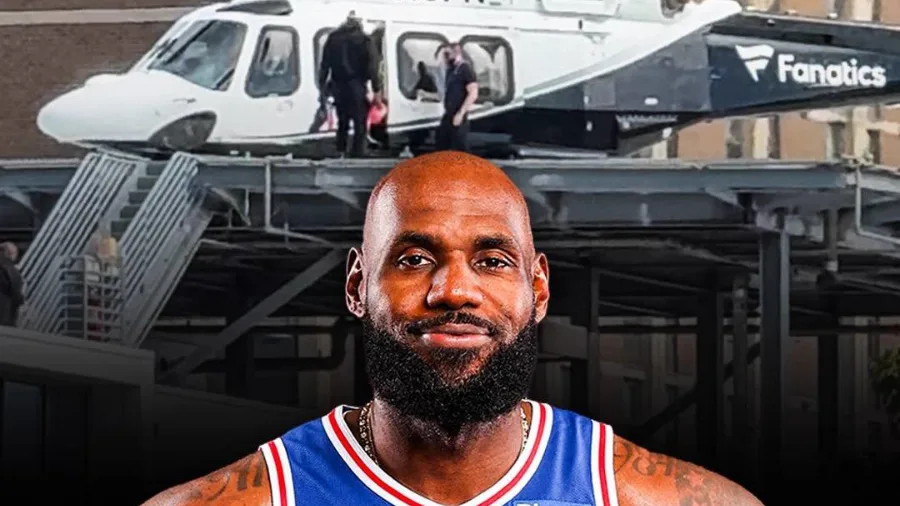
LeBron James’ helicopter arrival at Philadelphia’s training sessions is a symbol of time management, human capital, athletic performance, and personal brand value.
According to the sports economics platform, based on a report by Front Office Sports, 41-year-old basketball superstar LeBron James lives in New York and travels to the team’s area in New Jersey and Pennsylvania to attend Philadelphia’s practices and games, using a Fanatics helicopter. This is part of his multi-year commercial contract with Fanatics, signed in January 2024, which also includes access to the company’s aircraft fleet. Ground travel from New York to Philadelphia usually takes about 90 minutes to two hours, while the helicopter flight takes about 30 minutes.
The key point is that, according to Front Office Sports, James does not pay for this travel directly; using Fanatics’ aircraft fleet is one of the benefits of his commercial contract. The market cost of a one-way helicopter trip on this route is reported to be around $4,000 to $10,000.
Time is the most important asset of a professional athlete.
The economics of this decision should be explained by the concept of opportunity cost. For an ordinary person, saving an hour in commuting may have limited value, but for an athlete like LeBron James, every hour can be part of his human capital—an hour that can be devoted to training, recovery, sleep, treatment, business activities, or media presence.
This issue is even more important for James because he is in his 24th NBA season, and body management and recovery at this age become an economic issue. The scientific literature in sports also shows that travel can affect athletes’ sleep, recovery, fatigue, and performance, and travel management is one of the factors that contribute to maintaining the performance of professional athletes.
Therefore, for someone like him, a helicopter is not just a luxury item; in such circumstances, it can be a tool for managing an athlete’s human capital.
Is the cost of a helicopter really high?
If we consider the cost of a round trip to be around $12,000—an estimate that PhillyVoice provided using a sample program that includes 41 home games and 26 practice sessions—the potential cost of James’s air travel in a season would be around $804,000. However, this is a hypothetical estimate of market cost and not the amount James actually paid, as his travel expenses are reportedly covered by Fanatics.
This figure is also interesting in comparison to James’s two-year, $8 million contract with Philadelphia. However, the cost of a helicopter should not be compared solely to his sports salary; a large part of the economic income of a superstar like James comes from commercial contracts, sponsorships, personal brand, investment, and intellectual property rights.
Why do big athletes receive such facilities?
In professional sports, not all players have the same economic value. Superstar athletes, in addition to their on-field performance, generate audience, media attention, sales power, and brand value.
Research published in the Journal of Advertising Research has shown that contracts with famous athletes can lead to increased sales for brands. Another study in the Journal of Retailing and Consumer Services showed that the personal brand of sports stars can have a positive effect on global brand value and consumers’ emotional relationship with the brand.
Therefore, when a company gives an athlete like LeBron James the opportunity to use a company aircraft or helicopter, it should not necessarily be considered a “gift.” It can be part of the compensation package and non-cash benefits of a commercial contract—a contract in which both parties have negotiated to create more economic value.
What does LeBron buy?
In fact, LeBron achieves several things at once by using a helicopter:
1. Time: Significant reduction in commuting time.
2. Recovery: Reduction of some fatigue caused by ground travel and freeing up time for rest.
3. Program control: Ability to better manage the balance between life in New York, Philadelphia practices, and business activities.
4. Performance maintenance: At older ages, body management and recovery become more economically valuable.
5. Brand value: James’s presence on his Fanatics helicopter has become media content and exposes the Fanatics name to millions of viewers.
In other words, the journey itself has become part of the brand economy.
This is not just LeBron’s story.
This pattern is part of the “superstar” economy in new professional sports. Athletes who have very high commercial value receive services that are not economically justified for an ordinary player—from private travel and medical and recovery services to personal advisors, security, nutrition, and brand management.
The reason is simple: when an athlete’s economic value to a club and commercial companies is very high, the cost of preventing his performance decline also increases.
The NBA has not considered athletes’ travel to be just a welfare issue for decades. A classic study on NBA travel programs showed that optimizing travel could both reduce player fatigue and lower the league’s economic costs; researchers in that study estimated a 20.4% savings in travel costs for their proposed programs.
An important lesson for sports economics in Iran
The main issue in Iran is not whether a footballer should commute by helicopter or not. The more important issue is whether our clubs and athletes know about the economics of time and human capital at all.
In a professional club, a player’s cost is not just his salary. Salary, insurance, bonuses, treatment and recovery costs, travel, nutrition, accommodation, and even the opportunity cost of missing games are all part of a player’s contract economics.
If a club spends billions of tomans on a player’s contract but has no economic plan for his nutrition, recovery, travel, performance data, and medical management, it has essentially left a large part of its investment unmanaged and without risk management.
LeBron James’s helicopter is therefore more about the economic value of an athlete’s time than about a luxury item.
In the economics of professional sports, the right question is sometimes not “How much does this service cost?” but rather “How much of the athlete’s human capital value does this service protect and how much economic value does it create or preserve?”
Mehdi Hajivand, sports economics expert
End of message.