
News · Economics and Business of Sports · Finance and Investment
The price of a signed jersey or historic sports ball is determined by a combination of objective and subjective factors that together assess its rarity, authenticity, and market appeal. Below are the key elements that collectors, dealers, and auction houses typically consider when valuing these items. **1. Authenticity & Provenance** - **Signature verification** – The credibility of the signature is paramount. Professional authenticators (e.g., PSA, JSA, Beckett) examine the ink, pen pressure, and consistency with known samples. A verified signature can add thousands of dollars; an unverified or questionable one can drastically reduce value. - **Documentation** – Original receipt, letter of authenticity, or historical records (newspaper clippings, photos) that link the item to the specific player, game, or event strengthen provenance and boost price. **2. Rarity & Historical Significance** - **Player stature** – Items belonging to Hall‑of‑Fame athletes or iconic players command higher prices than those of lesser‑known figures. - **Game‑used vs. replica** – A jersey actually worn in a notable game (e.g., a “game‑worn” Super Bowl jersey) is far more valuable than a standard replica. Similarly, a ball used in a historic moment (e.g., the first basketball shot in a championship) carries premium value. - **Limited edition runs** – Some jerseys are produced in limited quantities (e.g., “1 of 100” commemorative runs). The lower the production number, the higher the perceived rarity. **3. Condition & Preservation** - **Physical state** – For jerseys: fabric integrity, stitching, stains, wear, and any repairs. For balls: surface condition, stitching, discoloration, and whether it’s “game‑used” or “new‑old stock.” - **Storage history** – Items kept in climate‑controlled environments, away from direct sunlight, tend to retain value better than those that have been mishandled. **4. Market Demand & Collector Base** - **Current trends** – Hot players, upcoming anniversaries, or trending sports (e.g., a surge in basketball memorabilia) can inflate prices. - **Geographic interest** – Certain items attract strong demand from regional collectors (e.g., a New England Patriots jersey may draw premium interest in New England). **5. Comparative Sales Data** - **Recent auction results** – Auction houses (Sotheby’s, Heritage, Goldin) publish realized prices for similar items. Appraisers compare the subject item to recent sales of comparable signed jerseys or historic balls. - **Online marketplace listings** – Platforms like eBay, Heritage Auctions’ “Live” listings, and specialized dealers provide real‑time price benchmarks. **6. Expert Appraisal** - **Professional grading services** – PSA, JSA, Beckett, and others not only authenticate signatures but also assign a grade (e.g., “PSA 9” or “JSA 8”) that reflects both authenticity and condition. Higher grades translate directly into higher market prices. - **Appraisal reports** – Detailed condition reports and provenance documentation prepared by specialists can serve as valuation tools for insurance or resale. **7. Additional Features** - **Customization** – A jersey with a player’s name and number in distinctive stitching (e.g., bold colors, special fonts) can be more desirable. - **Special editions** – Jerseys released for charity events, milestone anniversaries, or collaborative designs (e.g., artist‑crafted jerseys) often carry added narrative value. **Putting It All Together** When assessing a signed jersey or historic ball, experts typically follow this workflow: 1. **Authenticate** the signature and item through a recognized service. 2. **Document** any provenance (photos, newspaper clippings, original packaging). 3. **Grade** the item for condition using the service’s standards. 4. **Research** comparable sales in recent auction catalogs and online listings. 5. **Adjust** the price based on current market demand, player popularity, and rarity. Because each item is unique, two seemingly identical pieces can vary widely in price—sometimes by tens of thousands of dollars—based on subtle differences in signature quality, provenance, or condition. For the most accurate valuation, it’s advisable to have the item professionally authenticated and graded, then consult recent auction results and current market trends.
Valuing sports memorabilia: from authenticity and rarity to real market price.
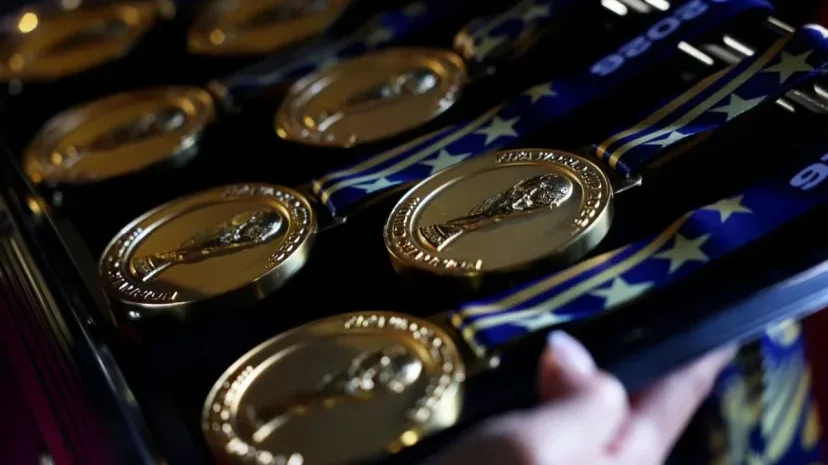
In the authentic sports memorabilia market, an item's value is determined by the significance of the event, its rarity, and its transaction history.
According to the sports economics platform (sportseconomics.ir), citing Trade News, valuing sports memorabilia is a crucial aspect of the collectibles market. In this market, an item’s price isn’t solely determined by its production cost or age. Instead, its final value is shaped by a combination of physical attributes, historical significance, and buyer demand. For instance, two shirts bearing an athlete’s name might look identical, but one could have been worn in a historic game, while the other is a commercial product with the same signature. Differences in usage history, ownership records, and connection to a specific event can significantly impact the value of these items.
Therefore, a professional evaluation of sports memorabilia should begin by answering three key questions: What exactly is the item? What evidence exists to prove its authenticity and history? And how much are buyers willing to pay for an item with these characteristics?
5 key factors in pricing
1. Authenticity and ownership history
Authenticity is one of the most critical factors in determining price. A genuine signature, use of the item in a competition, or its connection to a specific event should be supported by valid documentation whenever possible. Competition photos, purchase records, expert certificates, and ownership history can all play a role in this process. For example, the American company Professional Sports Authenticator (PSA) uses specialized methods to verify signatures, including analyzing signature structure, examining ink, and comparing it with valid samples. PSA also allows for the verification of certificate numbers and registered records for certain items. However, it’s important to note that a certificate of signature authenticity does not necessarily prove that the item was used in a specific competition. Proving this claim requires separate evidence.
2. Historical significance of the event
An item’s connection to a world championship, a record-breaking performance, a farewell game, or a memorable moment can increase its demand. However, historical significance must be evaluated alongside valid documentation and real market demand; a seller’s claim alone is insufficient to create additional value. A prime example is the jersey of American baseball legend Babe Ruth, which sold for $24.12 million in August 2024. This jersey was associated with the 1932 World Series final and one of the most iconic moments in baseball history. This transaction demonstrated that a combination of historical significance and event-related evidence can elevate an item’s value to an exceptional level.
3. Rarity and supply volume
The fewer examples of a memorabilia item that exist, the greater the likelihood of competition among collectors. However, rarity alone does not guarantee a high price. An item may be extremely rare, but if buyers have no interest in it, its transaction value will remain limited. Conversely, a collectible card of a famous athlete produced in limited quantities, with few intact examples, may be traded at a significant price due to the combination of rarity and high demand.
4. Physical condition and storage quality
Tears, stains, discoloration, moisture damage, or tampering can significantly affect the value of many memorabilia items. However, in some cases, the natural effects of an item’s use in a competition are considered part of its history. Therefore, the evaluation criteria for a historical jersey differ from those for a collectible card. In the sports card market, PSA has established specific standards for evaluating quality, including corners, surface, image focus, and damage effects. These standards highlight how quality grading can influence the comparison and pricing of similar items.
5. Athlete’s fame and market demand
An athlete’s global fame, record of achievements, popularity among fans, and connection to a team or historical period can influence demand. However, popularity alone is not enough to determine price. The market must demonstrate that buyers are willing to pay a certain amount for the item. Therefore, the final price of similar transactions typically provides more useful information than sellers’ proposed prices.
The difference between proposed price, appraisal value, and transaction price
When valuing sports memorabilia, it is essential to distinguish between three concepts. The proposed price is the amount the seller requests for the item, which may be higher or lower than its realizable market value. The appraisal value is an estimate based on evidence such as authenticity, item condition, and similar transactions. This estimate also depends on the quality of information and the evaluation method used.
The transaction price is the amount the buyer actually pays. For market analysis, it is best to examine the final prices of several comparable transactions and determine whether additional costs and commissions are included in the stated figure. Even the final price of an auction does not necessarily equal the net amount received by the seller, as other costs may be associated with the transaction.
How can a valuation system be established in Iran?
Developing the sports memorabilia market in Iran requires the creation of appraisal and information infrastructure. The first step could be to develop a framework for registering item specifications, ownership documents, images, storage records, and evidence of its connection to competitions. Next, independent experts and specialists in various sports disciplines should participate in the evaluation process. The characteristics of an Olympic medal, a football match jersey, a boxing glove, and a collectible card differ, and they cannot all be priced using a single criterion.
Creating a transaction database, publishing final auction prices, and registering appraisal methods can also help increase transparency. Cooperation from sports museums, federations, clubs, collectors, and auction organizers is essential in this regard. To begin, a pilot project with a limited number of documented memorabilia from a few sports disciplines could be implemented. In this project, each item would have a specific identity card, and its appraisal value would be compared with the final sale price. The results of such a program would gradually provide the necessary information to develop criteria suitable for the Iranian market.
Valuation does not guarantee profit
An increase in the price of a memorabilia item in the past does not guarantee that its value will increase in the future. Changes in collectors’ tastes, decreased demand, difficulty in reselling, storage costs, insurance, and auction commissions can all affect the real return. Therefore, valuation should be conducted with the goal of creating transparency and a better understanding of the market, rather than solely to justify high prices or present every item as an investment opportunity.
Ultimately, the economic value of sports memorabilia is defensible when a connection is established between authenticity, historical significance, and real demand. Creating a transparent system for appraisal and recording transactions, in addition to protecting buyers and sellers, can serve as one of the essential infrastructures for the development of the sports memorabilia economy in Iran.
Mehdi Hajivand, Sports Economics Expert
End of message