News · Economics and Business of Sports · Soccer
The economy bids farewell to Messi.
When a star player’s final game becomes a commercial product
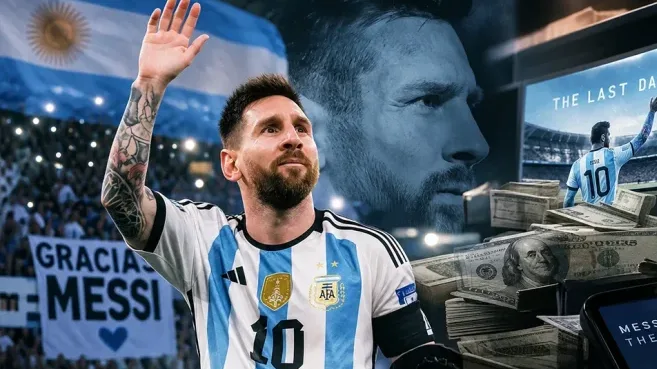
Lionel Messi’s farewell to the Argentine national team is a clear illustration of the economic power of “star capital” in sports.
According to the sports economics platform Sportseconomics.ir, citing Tejarat News, the match between Argentina and Benin on October 6, 2026, at Buenos Aires’ Monumental Stadium, was organized by the Argentine Football Association with a multi-tiered pricing structure. The most expensive ticket reached 480,000 pesos, and demand was so high that all 85,000 tickets sold out within hours of going on sale.
At the end of August, 39-year-old Messi bid farewell to the Argentine national team. Over more than two decades, he has achieved victories in Copa America, Finaisima, the 2022 World Cup, and reached the final of the 2026 World Cup with his national team. Therefore, the October 6 match can be seen not just as an ordinary friendly game, but as an “economic event based on personal branding.”
The ticket market: the first layer of revenue
For the Argentina-Benin match at River Plate Stadium, the Argentine Football Association (AFA) set ticket prices ranging from 90,000 pesos for the Popular section to 480,000 pesos for the best seats. Prices for different sections were announced as 180,000, 320,000, 450,000, and 480,000 pesos, while children’s tickets aged 3 to 10 in the Popular section cost 29,000 pesos. Tickets were sold online.
The Monumental Stadium currently has a capacity of 85,018 people. If the entire capacity is sold at the minimum price of 90,000 pesos, the calculated gross ticket revenue would be approximately 7.65 billion pesos (about $5 million). In a completely hypothetical scenario where all seats are sold at 480,000 pesos, this figure would reach about 40.8 billion pesos (about $27 million).
However, neither of these figures represents the actual revenue of the match, as seat prices vary and part of the stadium’s capacity may be allocated to guests, media, event staff, or organizational commitments. Even assuming an average of 250,000 pesos per ticket is purely an analytical scenario that generates a gross revenue of about 21.3 billion pesos. But the more important point is that the economics of Messi’s farewell does not end with tickets.
A star who continues to generate income even after the last game
In sports economics, a big star is an “invisible asset.” The value of this asset is not limited to athletic performance; it can also affect ticket sales, jersey sales, fan merchandise, sponsorship contracts, broadcasting rights, social networks, sports tourism, hospitality, and even the commercial value of the host city.
Messi’s own experience in American football is a notable example of this phenomenon. A 2025 Forbes study showed that Messi’s presence on the Inter Miami roster, even in games he didn’t play, helped sell over 400,000 tickets in 12 away games. The total attendance recorded in these games was 406,864 people.
Even before his first game for Inter Miami, the secondary ticket market reacted strongly. Forbes reported in 2023 that the price of the cheapest ticket for one of the team’s games increased from $29 to $459 after Messi’s transfer was announced. Therefore, if Messi’s “presence” can create economic demand, it is natural that his “final appearance” also has the potential to become a commercial product.
Messi is not the only example
A more important historical example is Pelé. When the New York Cosmos brought Pelé out of retirement in 1975, his first game in New York became a major media event. The match was attended by 22,500 spectators, and FIFA reported that about 50,000 others were unable to enter the stadium. The match was broadcast in the United States and 22 other countries, and journalists from 25 countries went to New York to cover it.
Pelé also played in his farewell match for Cosmos and Santos in 1977—an event that turned part of his career into a media and commercial product. FIFA also emphasized that Pelé’s presence significantly increased Cosmos’ popularity and expanded football in New York. This experience offers an important lesson: the economic value of a star does not necessarily end with his last game; rather, the last game may be the pinnacle of a commercial cycle.
From “farewell game” to “economic platform”
If this match is designed from a sports economics perspective, several revenue layers can be defined for it: regular tickets, VIP and hospitality, jerseys and memorabilia, collectible and signed items, exclusive digital content, broadcasting rights and behind-the-scenes content, special match sponsorship, environmental advertising, fan experiences, stadium tours, restaurants, and match-day services.
The Argentine Football Association (AFA) has previously taken steps to commercially exploit the brand of its champions. In 2026, the association announced an agreement to offer memorabilia and limited, signed items of the World Champions in the Indian market, with Messi’s name among the players in this collection. In fact, one can define an economic lifecycle for a big star: the emergence period, the peak, brand consolidation, the final period of activity, farewell, and even the post-retirement period.
Lessons for Iranian sports
The most important lesson for Iranian football from this experience is that sports stars should not be seen only as “players”; rather, their economic brand value should be planned for years in advance.
If players like Ali Daei, Karim Bagheri, Mehdi Mahdavikia, Javad Nekounam, or the new generation stars have become symbolic capital of Iranian football at some point, clubs and the federation could and should have had a clear economic plan for the end of their professional careers—from farewell matches and memorabilia to museums, documentaries, digital content, fan meetings, training courses, brand ambassadorship, and cooperation with sponsors. Of course, this program should not be limited to ticket sales alone. A successful “economic farewell” should be designed months in advance and have a defined target market, business partner, product, price, sales channel, and revenue model for each section.
From this perspective, Messi’s farewell carries an important message for sports managers in Iran: a star does not necessarily leave sports economics when he leaves the field. If we have a plan for his reputation, memory, and popularity capital, even the last game can be the beginning of a new period of revenue generation, fan engagement, and sports brand development.
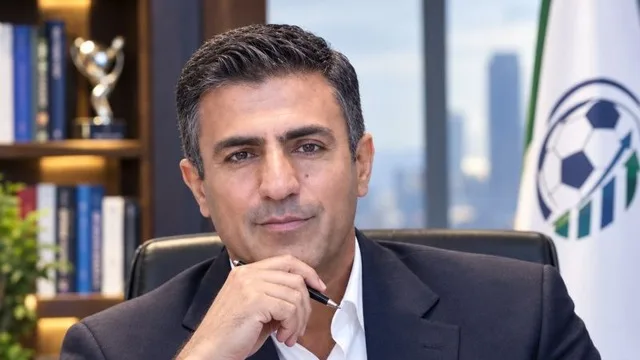
Mehdi Hajivand, Sports Economics Expert
End of message
Related news
Selected