
News · Economics and Business of Sports
From Iran’s victory in Nagoya to the billion-dollar e-sports industry
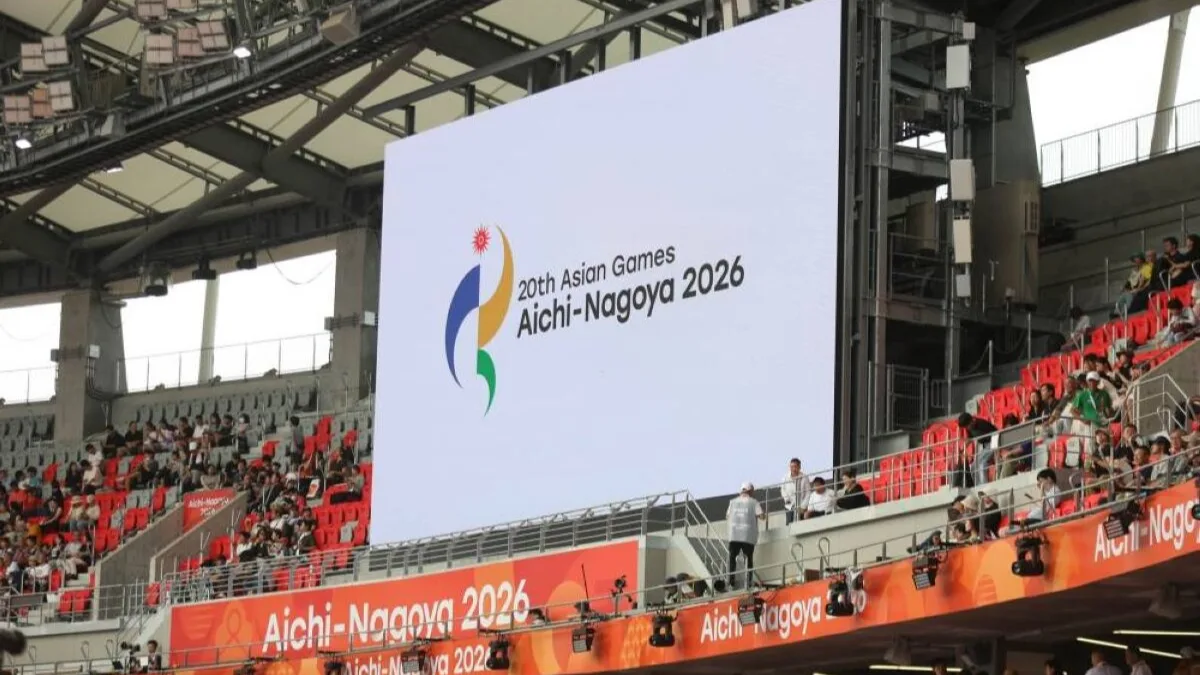
Iran’s victory in the eFootball competition at the Nagoya Asian Games has once again thrust electronic sports into the spotlight.
According to a report by the specialized sports economics platform, citing Trade News, Iran’s team recently secured a 4-2 victory over Malaysia in the eFootball final at the Nagoya Asian Games, winning gold medals in both mobile and console categories. After Abolfazl Aghaei Nasab’s loss in the mobile category, Hassan Pajani, a three-time world champion, sealed the win for Iran with a 3-0 victory over his Malaysian opponent. This achievement comes at a time when Malaysia also claimed its first-ever gold medal in Asian e-sports history, winning in Gran Turismo 7 at the same event.
For Iran, this success goes beyond a single gold medal. E-sports are rapidly becoming a key component of the global sports economy, where the “digital audience” can be as valuable as a stadium spectator in generating economic value.
From a student competition to a global industry
The origins of professional gaming competitions date back to the 1970s. According to the Guinness Book of Records, the first recognized video game tournament took place on October 19, 1972, at Stanford University’s Artificial Intelligence Laboratory. The event, known as the Intergalactic Spacewar Olympics, featured the game Spacewar.
Eight years later, Atari’s Space Invaders Championship, attended by around 10,000 people, transformed video game competitions from niche activities into large-scale events. The gradual development of the internet, online networks, streaming platforms, and multiplayer games paved the way for today’s professional gaming structure.
E-sports in Asia followed a similar trajectory. The sport was showcased as a demonstration event at the 2018 Jakarta Asian Games and was officially included as a medal-winning discipline for the first time at the 2022 Hangzhou Asian Games. The Asian Olympic Council allocated seven gold medals for e-sports in Hangzhou, with 476 athletes from 30 National Olympic Committees participating. In Nagoya, the sport’s prominence has grown even further. According to Konami, the 2026 edition will feature 13 game titles across 11 genres, with eFootball competitions held in both console and mobile categories.
Financial turnover: a small part of a large gaming economy
To understand the economic significance of e-sports, it’s essential to distinguish between the “gaming industry” and the “esports economy.” According to a Newzoo report, the global digital gaming market is projected to generate approximately $188.8 billion in revenue by 2025, with the number of players worldwide reaching around 3.6 billion.
Within this market, e-sports represent a smaller but highly specialized and commercial sector. S&P Global estimates that esports competitions generated about $2.34 billion in revenue in 2024, derived from sources such as sponsorships, media rights, ticket sales, merchandise, and other related activities. This figure is separate from the overall gaming industry’s revenue and highlights that the esports economy relies more on event economics, audience engagement, and advertising than on game sales alone.
Sponsorship, broadcast and media rights, advertising, ticket sales, merchandise sales, competition prizes, player contracts, and live streaming platform revenue are the key components of this ecosystem. As a result, sports clubs can leverage e-sports to develop their brand, attract younger audiences, increase commercial revenue, and build a digital fan community.
Iran: domestic market and export opportunities for services
The economic potential of this sector in Iran is also significant. According to a GlobalData report, Iran’s e-sports market was valued at approximately $19.2 million in 2024, representing a compound annual growth rate of 14.1% since 2019. The same report indicates that sponsors, with revenue of $11.7 million, constitute the largest segment of Iran’s esports market.
However, the esports market should not be conflated with Iran’s entire gaming industry. The National Computer Games Foundation previously reported that the country’s computer gaming market was worth over 19 trillion tomans, with the majority of this amount spent on hardware and consoles.
Therefore, Iran’s victory in Nagoya can be viewed as more than just a sporting achievement. If this success is accompanied by the establishment of professional leagues, the attraction of investors and sponsors, the development of media rights, player training, the hosting of international events, and the integration of esports with football clubs, e-sports could become a new market in Iran’s sports economy. This market’s primary advantage lies in its access to young, digital, and cross-border audiences.
In this context, the gold medal from Nagoya can be seen not as the end of a competition, but as a sign of the economic potential of a sport that is increasingly blurring the lines between sports, technology, media, and business.
Mehdi Hajivand, sports economics expert
End of message