Taj: Clubs must take the professional licensing issue seriously.
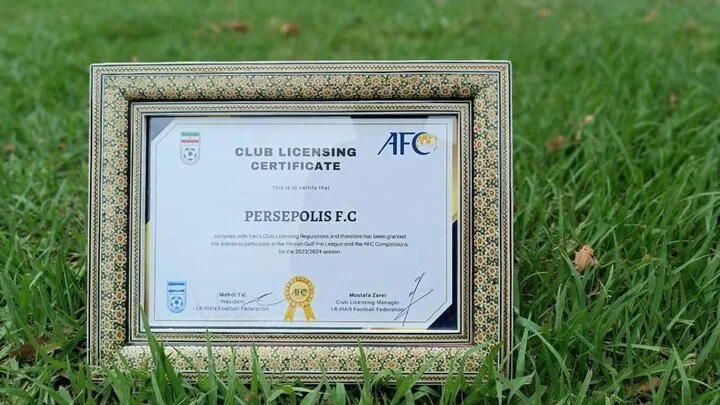
The head of the Football Federation has urged club managers to pay special attention to obtaining a professional license.
According to the specialized sports economics platform, citing Tasnim, Mehdi Taj spoke at the annual seminar for professional licensing officers of Iranian football clubs. He said that in the early days, the focus of professional licensing was primarily on disclosing financial statements, reporting profits and losses, and ensuring financial transparency. However, over time, the requirements have become increasingly stringent, and we now face a system with very strict and challenging demands. Those familiar with the issue understand that implementing professional licensing in our country is extremely difficult due to liquidity constraints, and professional licensing officers must take this matter very seriously.
Taj announced that Saket has decided to meet with the board members of all clubs, emphasizing that this should begin immediately. The goal is to ensure that club managers understand what criteria will be considered for obtaining a professional license and what requirements they must meet. Stadiums have been categorized into five groups, and for countries like Iran, the conditions have become somewhat more challenging. Requirements such as stadium capacity must be clearly defined, followed by considerations like the two-sided ceiling, lighting, and VVIP seating areas.
He further discussed other professional licensing requirements, noting that recent regulations have been introduced regarding stadiums with criterion A. Given the complexity of the work, these requirements are not currently deemed essential and primarily focus on areas such as seating and opposite seating arrangements. However, this decision will be implemented starting from 2028.
The head of the Football Federation highlighted the financial fair play guidelines, stating that specific legal requirements must be in place. Previously, discussions revolved around club budgets, attracting foreign players, and domestic player contracts. In some cases, foreign players were of lower quality than our domestic players, which prompted us to ensure that the quality of foreign players meets an acceptable standard.
Taj continued by explaining that this is why we have established criteria such as international playing experience or participation in high-quality leagues. The ultimate goal of financial fair play is that if a club is financially stable, it can acquire expensive players, but if it lacks financial stability, it must sell its expensive players. In terms of income and expenses, we must work towards reducing accumulated losses.
He pointed out that all clubs have accumulated losses and emphasized the need to prevent operating losses as well. Clubs must reduce their expenses and avoid being unprofitable in each season. Improving ownership practices is another crucial condition. Clubs should decrease their dependence on the parent company and demonstrate in their records that their reliance on banks or parent companies has been reduced.
The head of the Football Federation stressed the importance of increasing club revenues, stating that clubs should diversify their income sources and reduce their dependence on the parent owner company to 60 percent. Most importantly, clubs must disclose their financial statements. If we declare that a club's expenses were a certain amount and the loss is known, the public should have access to this information and be able to make demands.
Taj noted that disclosing clubs' expenditure information is a common practice worldwide, as it encourages clubs to pay closer attention to their expenses and revenues. Therefore, clubs' financial statements and profit and loss reports must be disclosed in any possible way. We have been instructed that this should be done annually and is a key component of professional licensing. In fact, the main topic of today's meeting is the necessity of disclosing financial statements.
He addressed the penalties for non-compliance with professional licensing requirements, explaining that some offenses in the early years were met with leniency, but in subsequent years, more severe enforcement measures have been implemented. These include deducting three points, then six points, relegation to a lower division, and ultimately, the refusal to grant an operating license.
The head of the Football Federation stated that all these decisions can be appealed, but if the verdict is upheld in the appeal stage, the president and board members cannot alter these penalties, except in very exceptional cases where the issue can be brought to CAS. We face a challenging task ahead. Clubs must take professional licensing seriously from now on and plan to meet all its requirements.
End of message.